


 New
New
Mission Support
Products

Product Details
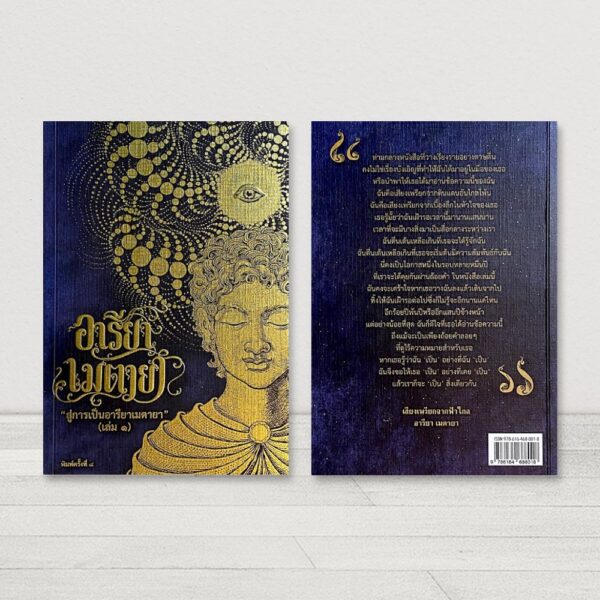
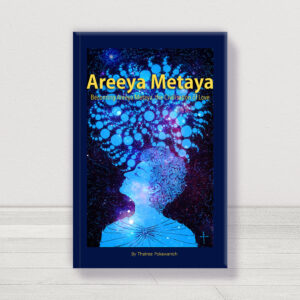
Hello everyone, I would like to use this post to officially introduce myself, as well as to explain the background, purpose, and inspiration behind this page and the novel, ‘Areeya Metaya.’
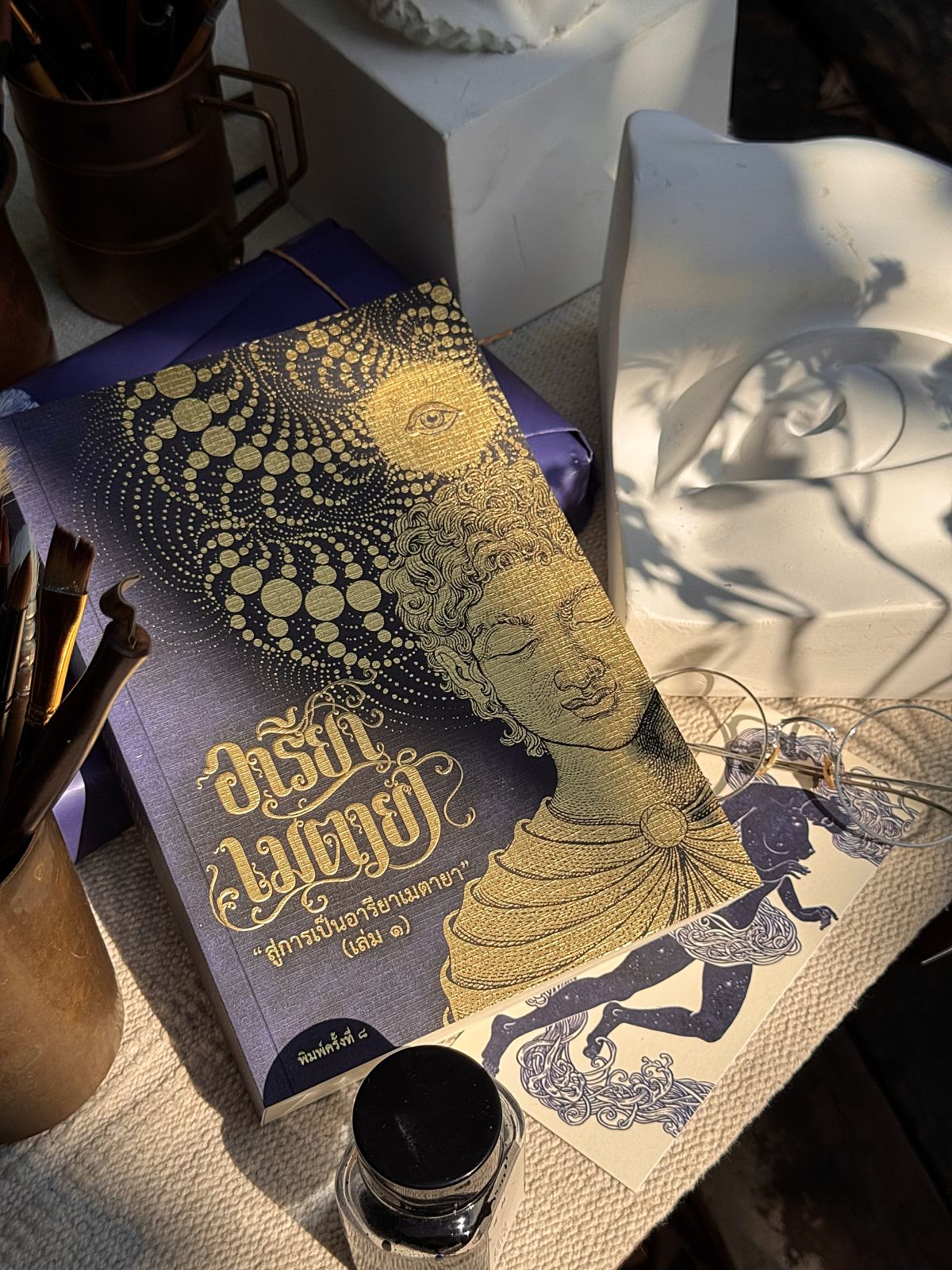
A close friend who has known me for a long time once asked why I suddenly started writing a book, as they saw absolutely no sign that I could ever do such a thing. It is not wrong for this friend to feel that something was unusual and to suspect that something was up. I would like to confess the truth right here: the truth is, I stole these ideas from someone. That someone is a person who is very close to me, someone who constantly guides and reveals things to me all the time. And now, I would like to introduce you to that person.
But before that… I must briefly clarify that right now, I am in complete control of my faculties—100% sane and sound. I can still perform my work duties and actively engage in business meetings. The reason I have to say this is because what I am about to tell you next might make you misunderstand and think that I have gone crazy…!!
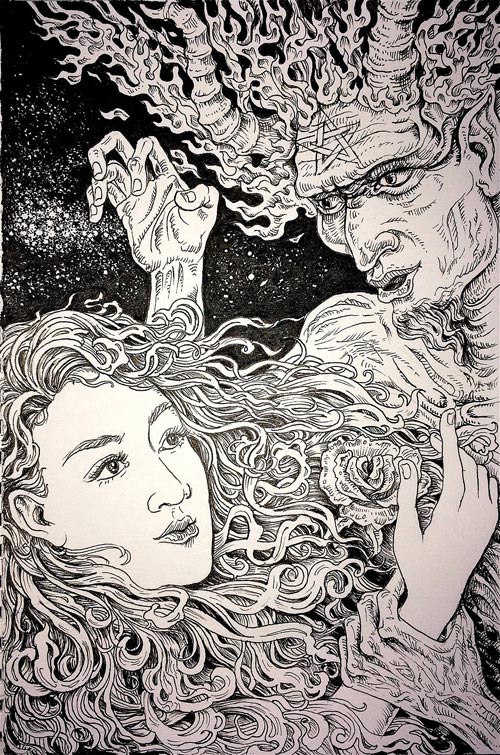
Alright… the person I am about to introduce to you is… the person inside of me!!… (Sounds like I’m starting to go crazy, right?) And what if I were to tell you that this person inside of me is actually inside of you as well? Most miraculously of all, they are the exact same person. This person inside of us has been with us all along. In fact, they speak, guide, and warn us all the time—especially about our own nonsense and shortcomings. Some of you might have experienced hearing what they have said or warned you about. It is just like the symbolic illustrations people draw, depicting a tiny angel sitting on one shoulder whispering good advice, while a tiny demon sits on the other shoulder, arguing against that advice.
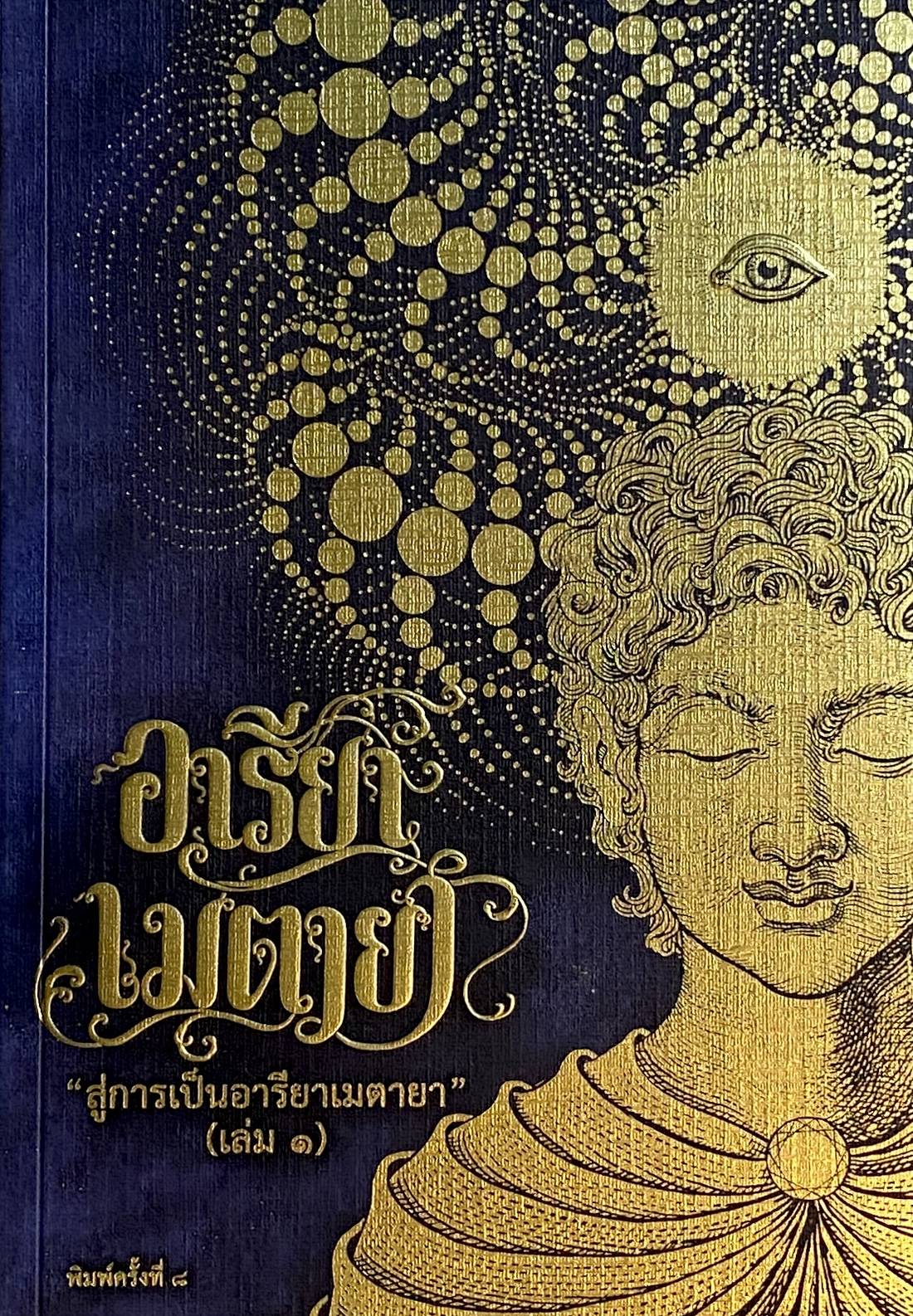
We must accept that, in reality, that tiny demon is none other than our own “conscious mind.” I say this because our conscious mind operates through a direct mechanism connected to a part of the brain called the “hippocampus.” This area is responsible for processing basic emotions such as happiness, likes, dislikes, love, and hatred, which are absolutely essential for survival. Without this part of the brain to help us distinguish what benefits us, we might not be able to sustain our lives or perpetuate our species. To put it simply, the conscious mind and this part of the brain always determine or stimulate us to think and act in ways that bring instant pleasure, comfort, or satisfaction first. And more often than not, this tends to lead us down a worse or lower path. For example, we always choose food based on deliciousness or personal preference first; we indulge in addictive or intoxicating substances because they bring enjoyment; and we pursue sexual desires because they are fun, and so on. Even in more complex scenarios, such as when we are angry, we usually feel the urge to retaliate against the other party because it makes us feel better.
And of course, we will also hear another voice constantly speaking and warning us all the time. I believe everyone has had the experience of hearing those warning voices. However, the reason we do not follow that voice is partly due to the brain mechanism mentioned above, combined with the role of the conscious mind, which directly controls the body. It serves as the channel for perceiving the outside world through the five senses—touching, seeing, smelling, tasting, and hearing—which are intensely vivid and distinct. Consequently, our conscious mind utilizes the body so freely that it completely ignores that quiet voice inside.
Now, let us look at the origin of this voice and see where it comes from. You might have heard before that some people in the past did not just hear ordinary warning voices from within; they were actually able to engage in a two-way conversation with that voice. Take the case of Moses, who conversed and questioned the inner voice and was commanded to do various tasks. Or the case of Noah, who was told to build a massive ark to carry animals and a specific group of people during the Great Flood. Even global religious figures like Jesus and the Prophet Muhammad spent certain periods of time conversing with the voice inside.
Arriving at this point, you can probably guess by now who this inner voice I am talking about refers to…? “God” would probably be a neutral term that could serve as a pronoun to represent this entity, as people have spoken about and recorded it this way before. But what about Buddhists like us? It might be hard to believe that such conversations with God can truly happen… But it does…!! Except our Lord Buddha referred to this as “Pannya” (Wisdom/Intellect). But hold on—I know your thoughts might currently be conflicting with what I am proposing. Please give me the opportunity to explain this reasonably and logically first.

First of all, we must ask: how does wisdom arise? Many people believe that wisdom comes from having “knowledge.” Yes, that is one factor. However, knowledge is vast and infinite, and we must also accept that the capacity of our five senses alone cannot possibly perceive data from the entire universe due to limitations of both distance and time. To acquire complete knowledge—knowledge that represents the absolute truth—we require another mechanism to assist us, which is the “mental mechanism.” Since the Lord Buddha needed to communicate this matter to the scholars of that era (the Brahmins), He explained it in the form of spiritual science, dividing the mind into two parts. The first part is called “Vithi-chitta” or the conscious mind. He explained that this conscious mind works in tandem with the five sense doors, which naturally carries constraints and operates through the brain mechanisms I previously described. What is fascinating, however, is the second part of the mind, which the Buddha called “Bhavanga-chitta.” Today, people refer to it by various names: the soul, the subconscious mind, the unconscious mind, the subtle mind, or the primordial mind. To keep it simple, let us refer to it as Bhavanga-chitta, just as the Buddha did.
Now, since we cannot access the absolute truth through the five senses—which includes the conscious mind, as they share the same perceptual system—the only remaining channel is through the “Bhavanga-chitta.” And the only way to access this Bhavanga-chitta is to transcend the Vithi-chitta, or the conscious mind, first. To put it simply, we must let go of the self, or ego. This is a process of spiritual science that you can prove for yourself, because the existence of the self can cause us to perceive things incorrectly from reality. To give you a clear picture, let’s look at an example: suppose there is a dish of food. If we have someone who normally prefers strong, intensely flavorful food taste it, they will say the dish is bland. But if we let another person who usually prefers bland food taste it, they will say the dish is heavily seasoned. In this scenario, we can see that the exact same dish yields two different interpretations and two completely different sets of knowledge. Of course, the variable that prevents this knowledge from being objective is each person’s likes, dislikes, or their “sense of self.”
Therefore, those who can transcend the self from their conscious mind will automatically enter the other realm of the mind. At that very moment, the inner voice will become crystal clear, and universal knowledge will pour into them. You will be able to query any doubts without limits. Thus, the words “God” and “Pannya” (Wisdom) hold no difference in meaning. We can refer to this entity through various roles, depending on our perspective. If we define it from the aspect of universal knowledge, we can call it “Wisdom,” “Dhamma,” or “Nature.” On the other hand, if we define it as the origin of all things, we can call it the “Heavenly Father,” “God,” or the “Creator.
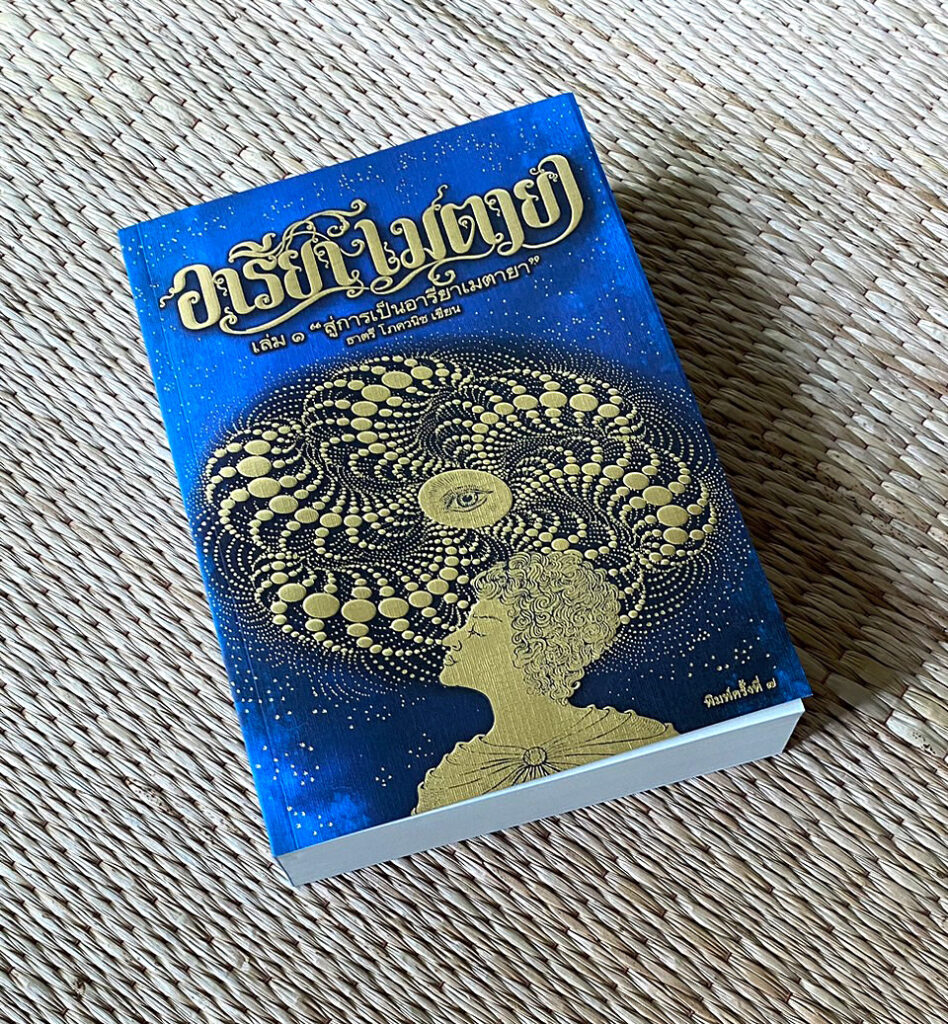
And this is the actual truth behind how I stole his ideas to write this novel, titled “Areeya Metaya.” I consider it a spiritual science fiction novel intertwined with philosophy, mystery, and historical fiction. Certain parts of the book explain the mechanisms of all things—from the smallest microscopic level to the grandest cosmic scale—illustrating how they interconnect both physically and energetically. It also projects a vision of a society where people utilize a specific mechanism to drive their community, lifestyle, environment, customs, governance, country, world, and the entire cosmos toward a perfect system. This ultimate system allows humanity worldwide to attain true peace and harmony. You can follow and read the entire story on the website via the link attached below.
I embrace you with a heart full of love. If you have read up to this point, welcome to the land of Areeya Metaya. Our encounter here is certainly not a coincidence.
Thatri Phokavanich (Doi)
Author of Areeya Metaya



ติดตามคลิปเสียงฉบับรวบรวมเนื้อหาความ”เป็น” อารียา เมตายา
ติดตามฟังคลิปเสียงทั้ง106 บทได้ที่
ฟังแบบ podcasts ทั้ง 106 บท ได้ที่
อ่านฟรีออนไลน์ได้ที่
Reviews
There are no reviews yet.